How to Script a B2B Video When You Have No Copywriter on Your Team
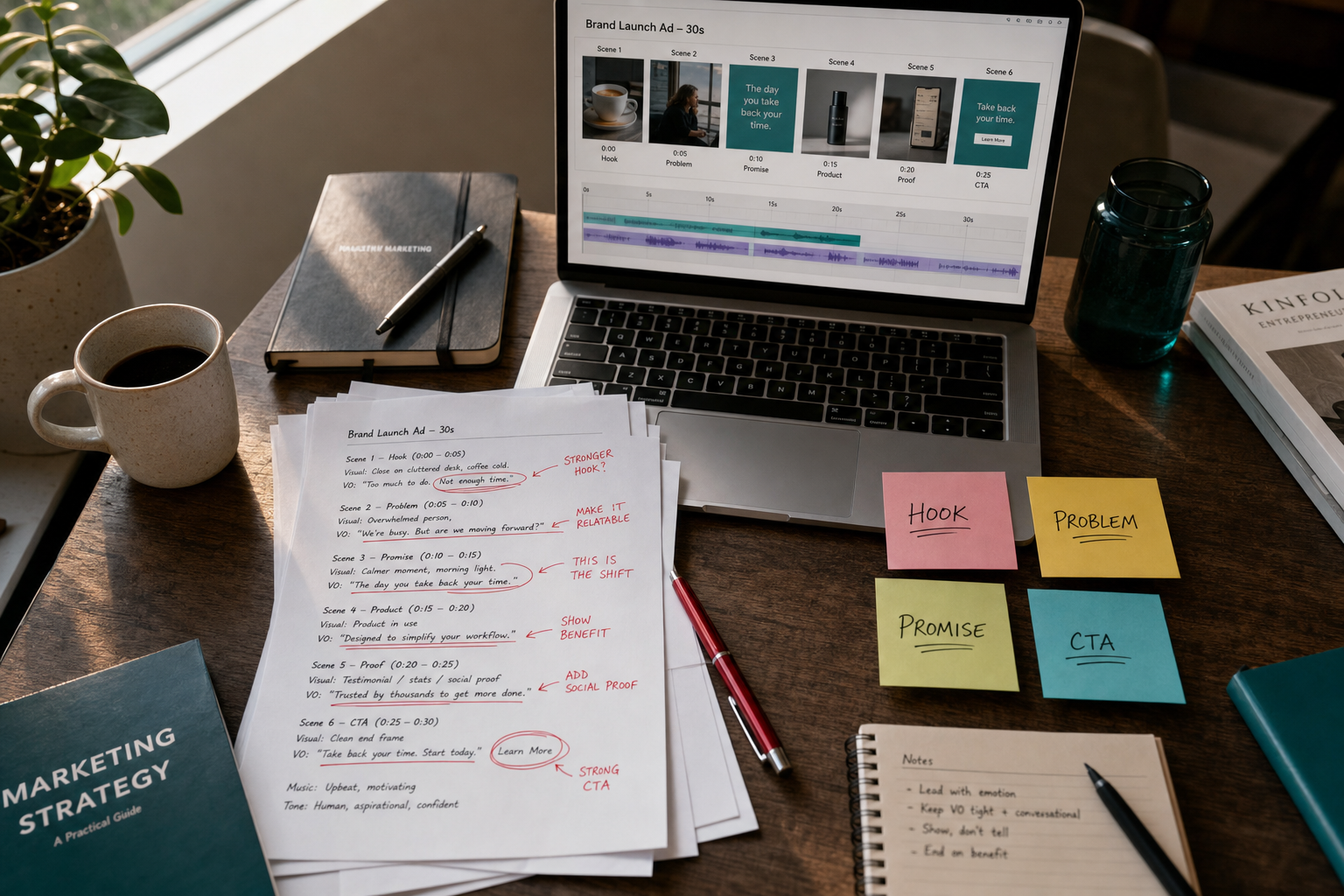
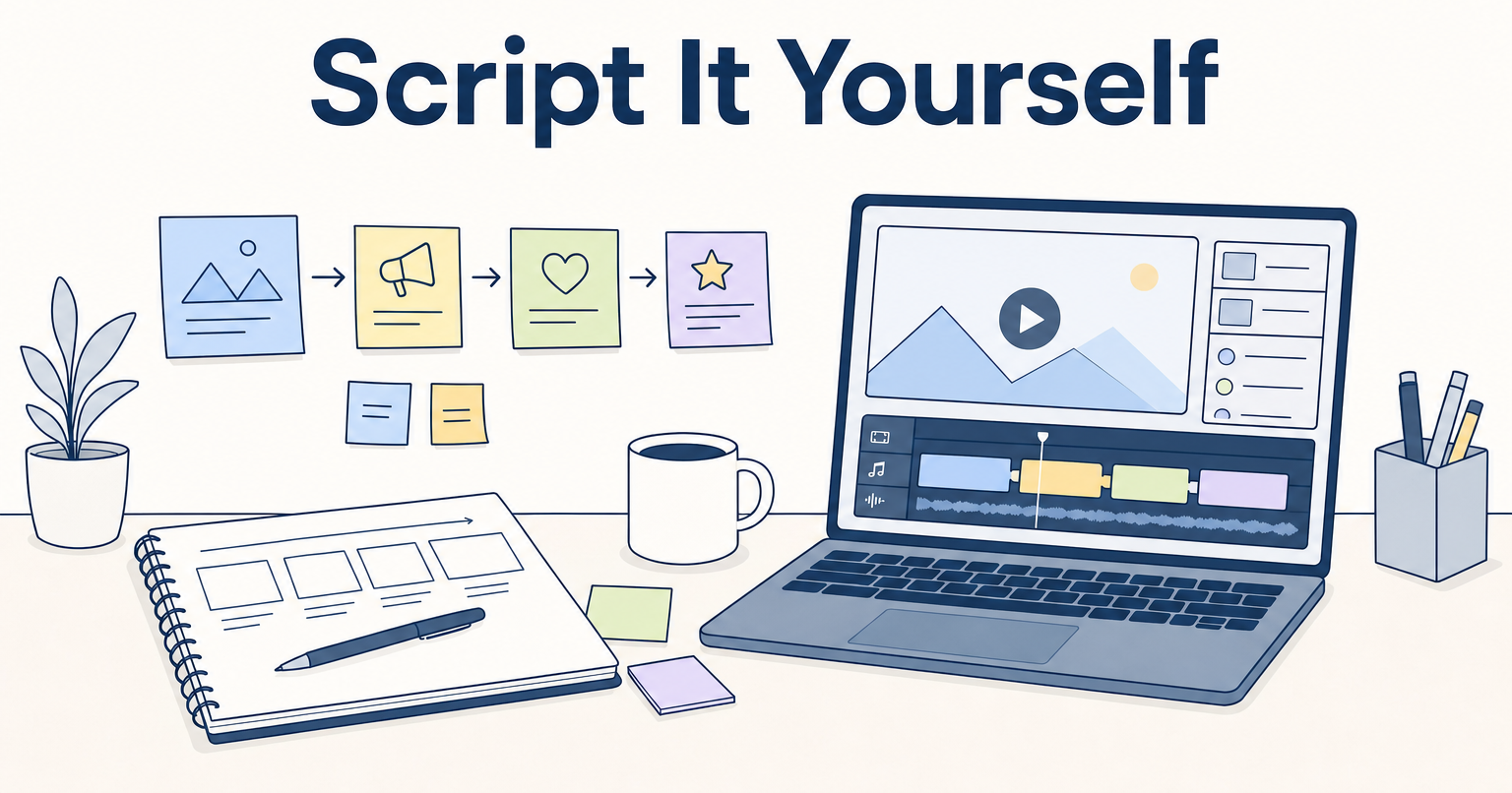
You do not need a professional copywriter to write a B2B video that holds attention. You need a repeatable structure that forces you to open with the viewer's pain, position your brand as the guide, narrow the message to three points, and edit ruthlessly for pacing. That structure, borrowed from Donald Miller's Storybrand framework and adapted for video, is what lets a marketing manager or founder turn a blank page into a script that actually converts.
Here is the step-by-step process we use at Full Send, laid out so a small team can run it themselves.
Step 1: Interview instead of writing from scratch
The best B2B video scripts are rarely "written" in the traditional sense. They are pulled from spoken language, either from a subject-matter expert on your team or a customer on a call.
Sit down with the person closest to the product or the customer and record a 30 to 45 minute conversation. Ask them about the pain their buyer feels before they show up, what they tried that failed, and what changes once the problem is solved. Then transcribe it.
Why this works: real speech carries cadence and specificity that copy written in a doc almost never has. You are not inventing language, you are harvesting it.
Step 2: Open with the viewer's pain, not your intro
This is where most B2B videos get it wrong. They start with someone introducing themselves, walking through their job title, and easing into the topic. No one cares. Those first few seconds decide whether anyone watches the rest.
Instead, open on the pain or the desire your viewer already feels. Then spell that pain out for another beat, for two reasons: the viewer is reminded of how badly they want it solved, and they feel understood.
Example openings that work:
- "Your sales team is spending hours on demos that never close."
- "You launched the product six months ago and adoption is flat."
No name. No logo. No "at Acme, we believe." Just the pain, first.
Step 3: Position the brand as the guide
Once the viewer is hooked on the pain, they need to know why they should trust you to solve it. This is a single, tight beat, not a company history.
State the brand name, then follow it with one or two positioning phrases that answer: who this brand is, who they help, what they are qualified to do, and the outcome they deliver. Two sentences at most.
"Acme helps mid-market SaaS teams cut their onboarding time in half. We have built activation flows for over 200 B2B products."
Move on.
Step 4: Narrow to three features or benefits
If your product does twelve things, your video is not going to talk about twelve things. Pick three. Every SaaS client we work with pushes back on this, and every time the answer is the same: if everything is exciting, nothing is exciting. If everything is loud, nothing is loud.
List every feature. Map each one to the pain it removes and the outcome it creates. Group the overlaps. Cut until you have three, sequenced in a logical order so the viewer can actually remember them.
Three points is a comprehension ceiling, not a suggestion.
Step 5: End with one clear next step
A B2B video should ask for exactly one thing. Book the demo. Start the trial. Download the guide. If you list three CTAs, viewers pick none. Restate the outcome you promised, then give the single next action.
Step 6: Edit the script by reading it out loud
Read the whole thing aloud, twice. Cut every sentence that could appear in any competitor's video. Cut every phrase that sounds like a press release. If a line does not either name a specific pain, promise a specific outcome, or move the story forward, delete it.
A tight 60 second B2B script is roughly 150 words. A 90 second script is roughly 220. Write to the runtime, not past it.
When to bring in help
Doing this in-house is completely viable for social clips, product update videos, and internal comms. Where lean teams tend to hit a ceiling is on high-stakes assets: the homepage explainer, the flagship customer story, the launch film. Those live or die on soundbite selection, sequencing, and pacing decisions that are hard to see from inside your own material.
If you want a partner who scripts and edits with this exact structure, that is the work we do at Full Send. And if you want to read more on the pre-production side of things, the pre-production guide is a good next stop.
Write the pain first. Guide, plan, three points, one ask. That is the script.