Video Podcast vs. Webinar: Which Format Builds More Brand Authority for B2B Tech Companies?
Short answer: a video podcast almost always builds more durable brand authority for a B2B tech company, while a webinar builds sharper, shorter-term pipeline. Podcasts compound because every episode is an evergreen asset that keeps producing clips, quotes, and search results long after it airs. Webinars spike because they are event-driven, gated, and tied to a specific offer. If you are choosing one recurring format to anchor a year of content, pick the podcast. If you need qualified leads for a product launch next quarter, run the webinar.
Below is how the two formats actually differ once you look past the surface.
What each format really is
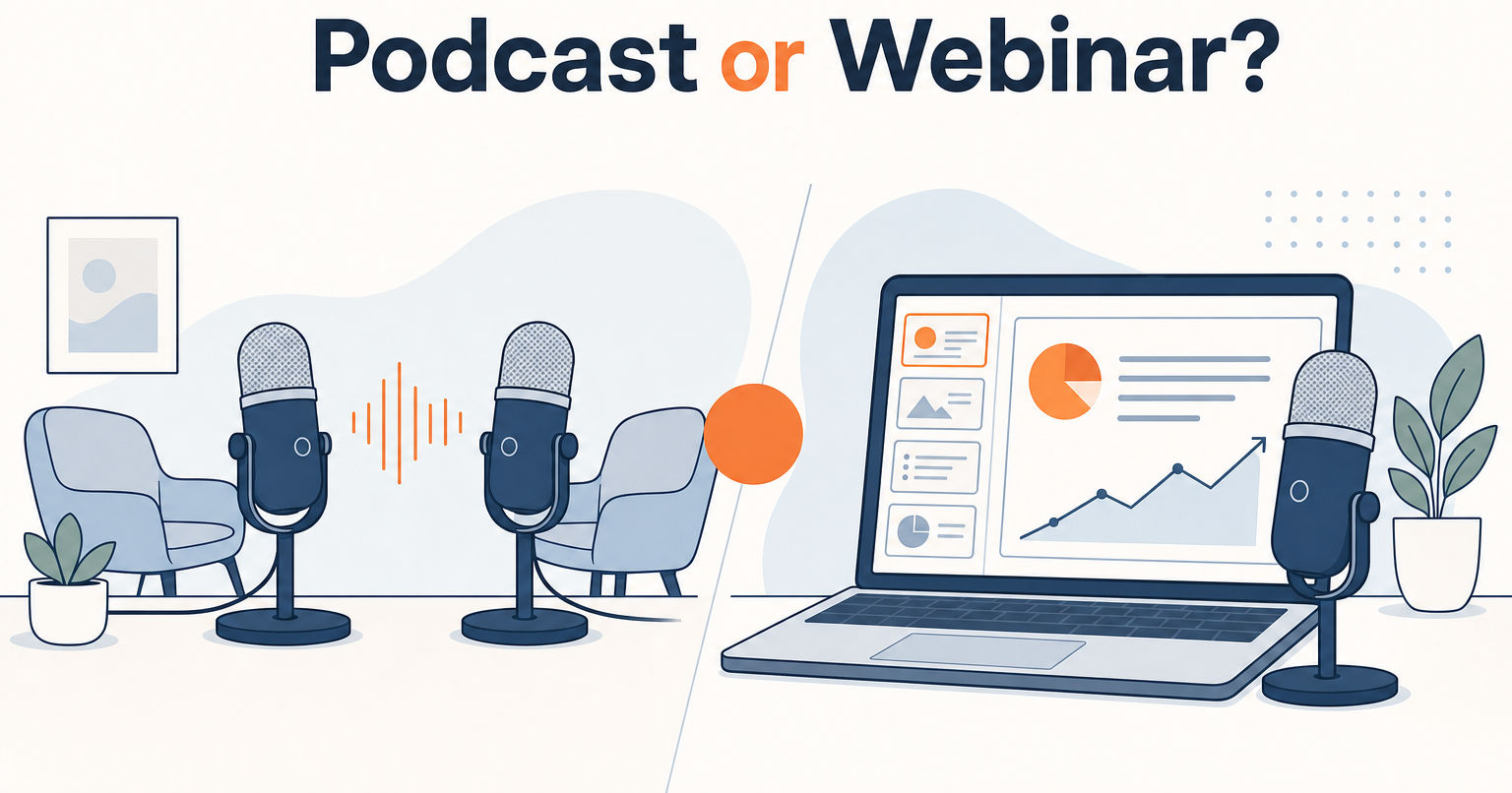
A video podcast is a recurring, conversational show, usually 20 to 60 minutes, with a host, one or more guests, and multi-camera video that gets sliced into clips for YouTube, LinkedIn, Spotify, and short-form platforms. It is designed to be watched, listened to, and shared.
A webinar is a live, single-event presentation, usually 30 to 60 minutes, built around a slide deck, a subject matter expert, and a Q&A. It is designed to be registered for and, most of the time, to end in a demo request or a follow-up sequence.
Same camera. Very different job.
Comparing the two on what actually matters
- Authority signal: A video podcast puts your team in conversation with credible guests. That association compounds; every guest is a public endorsement. A webinar is a solo performance, which reads as marketing even when the content is strong.
- Content yield per hour of production: One 45-minute podcast reliably produces one long-form video, an audio episode, five to ten short clips, a blog write-up, and a newsletter. A webinar typically produces the recording and, if you edit it, one highlight reel. Podcast wins on volume by a wide margin.
- Shelf life: Podcast episodes keep pulling traffic and referrals for months and years. Webinars decay fast because the offer, the data, and the urgency date the recording.
- Community effect: A recurring show creates a habit and a small tribe of return listeners. Webinars build a list, not a following.
- SEO and AI search: Transcribed podcast episodes give you a steady stream of long-tail pages that both Google and AI answer engines can quote. Webinars are usually gated, which hides the transcript behind a form and prevents indexing.
- Lead intent: Webinars pull higher-intent leads because registrants raised their hand for a specific topic. Podcast listeners are earlier in the funnel but stick around longer.
- Production complexity: Webinars are heavy on slides and rehearsal; podcasts are heavy on booking, editing, and clipping.
- Cost pattern: Webinars front-load cost into promotion. Podcasts front-load cost into a repeatable production system that gets cheaper per episode over time.
Where podcasts win on authority, specifically
Authority in B2B tech is built through repeated, unscripted exposure to a smart point of view. A podcast gives you that in a way slides never will. When your CEO thinks out loud with a category peer for 40 minutes, prospects hear judgment, not messaging. That is the exact thing procurement, engineering leads, and CFOs are trying to assess before they will take a sales call.
The catch is that this only works if the show is actually watchable. The same principle that keeps a testimonial from falling flat applies here: the first few seconds decide whether anyone stays. Open with the pain the guest is going to address, not a bio. Cut ruthlessly. Let energy rise and fall in step with the conversation. A poorly edited podcast is worse than no podcast, because you are broadcasting boredom to your ideal customer.
Where webinars win
Webinars are still the right call when you have a specific, technical topic your buyer needs to evaluate before they will demo. Migrations, integrations, compliance walk-throughs, and pricing model changes belong here. The format's structure, deck plus expert plus live Q&A, is exactly what a serious buyer wants when the stakes are concrete.
Pick a podcast if...
You want a recurring brand asset that compounds, you have access to credible guests in your category, your buyer is early in a long consideration cycle, and you can commit to at least 12 episodes. This is the right call for most mission-driven SaaS and B2B tech companies trying to be recognized as a category voice.
Pick a webinar if...
You have a specific offer or technical topic tied to a near-term pipeline goal, your audience is already on your list, and you need attributable leads inside a quarter. Run it, gate it, follow up hard, and move on.
The version most teams should actually run
Do both, but weight the podcast. Run a recurring video podcast as the core authority engine, then repurpose the best conversations into targeted webinars when a specific topic warrants a deeper, gated treatment. The podcast fills the top of funnel and builds the reputation. The webinar converts the interest the podcast created.
If you want help thinking through which format fits your goals, or you have a show idea that keeps stalling out because the production feels too heavy, that is exactly the problem Full Send's video podcasting and strategy work is built to solve. You can see more on how we approach video content or start here.