Music and sound design shape viewer retention in product videos by controlling emotional pacing: the right song, cut and rearranged to hit story turns, keeps a viewer leaning in, while silence, reverb tails, and a hard music return act as punctuation that makes key soundbites stick. When your video feels flat despite sharp visuals and tight copy, the audio track is almost always the reason. Picture and words carry information. Sound decides how the viewer feels about that information, and feeling is what keeps them watching past the ten second mark.
Here is what that actually looks like at the timeline level.
Music energy has to rise and fall with the story, not run underneath it
Most product videos drop a single stock track under the whole edit at a constant volume, then wonder why the piece feels like background noise. That approach treats music as wallpaper. Story-driven editing treats music as a second narrator.
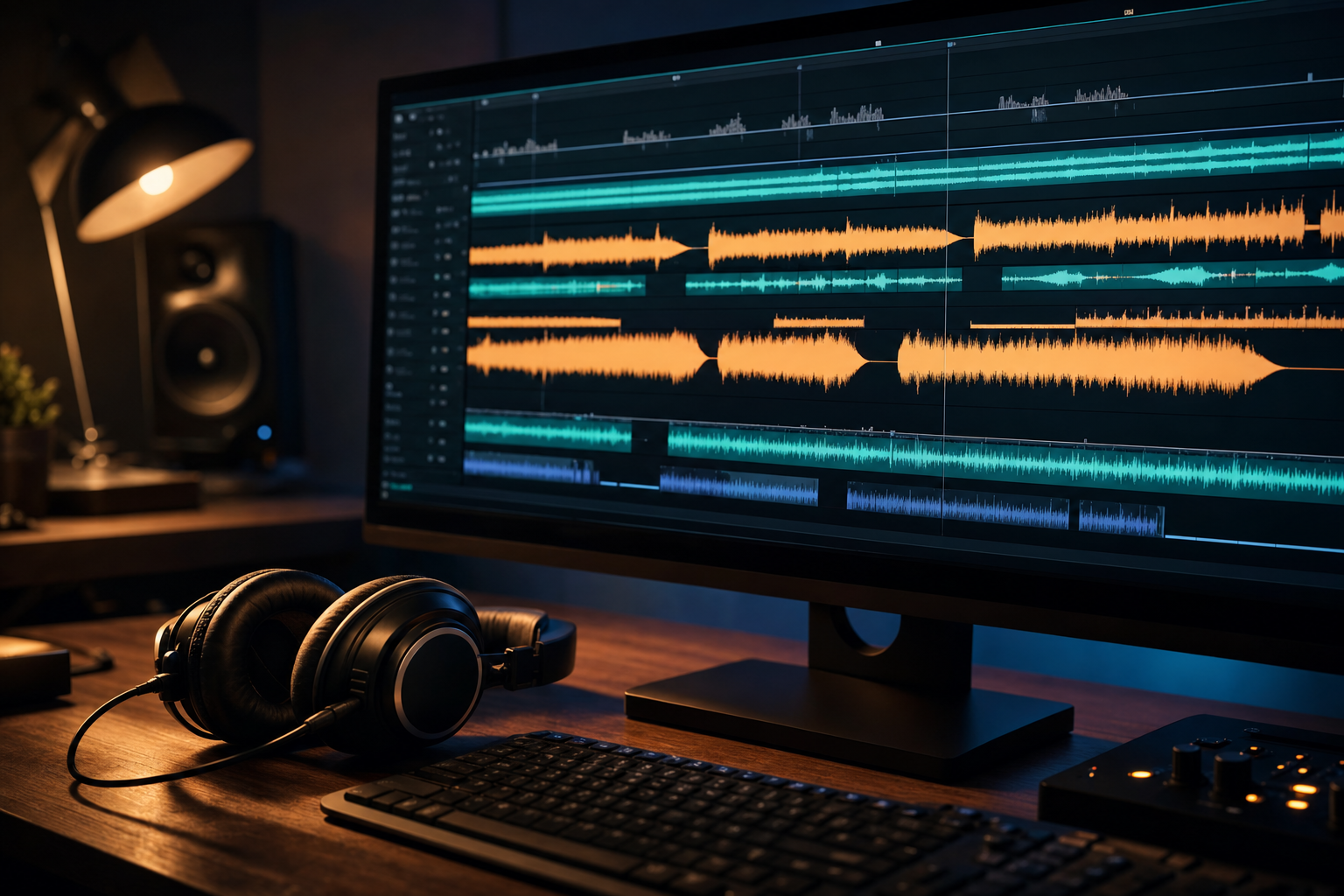
The practical move: map out the turns in your story first. Where does the pain land? Where do you name the guide? Where does the plan click into place? Where does the outcome pay off? Those are your musical turns too. From there, you manually trim, extend, and rearrange sections of the song so the swells in the track line up with the swells in the story. If the narration hits a low, thoughtful moment, the music thins out. If a customer says the line that unlocks the whole piece, the drums come back in on the beat.
The reason this works for retention is simple. Human attention rides on contrast. A track that never changes trains the ear to tune it out inside twenty seconds. A track that breathes with the story keeps re-engaging the ear, and the ear pulls the eyes with it.
Impact moments: how to punctuate a soundbite
At Full Send, we call these "impact moments," and they are the single highest-leverage sound design tool for a product video. The recipe:
- Identify the soundbite that carries the emotional or logical weight of that section. Usually one line from a founder, a customer, or a narrator.
- In the seconds leading up to it, layer in a subtle riser under the music to build tension.
- On the cut into the line, drop the music out entirely and let a clean reverb tail from the previous audio hang for a beat.
- Let the line land in near silence.
- The instant the line ends, bring the music back in hard, ideally on a downbeat.
That structure functions like a strong period at the end of a strong sentence. It tells the viewer, without any on-screen prompt, that what they just heard mattered. Do this two or three times across a two minute product video and the retention curve stops sagging in the middle third, which is where most explainer videos lose people.
Strategic silence is a feature, not a mistake
Silence makes producers nervous because it feels like something is broken. It is not. A half second of true silence after a customer says "we cut our onboarding time in half" does more for recall than any lower-third graphic. Silence signals importance. It also gives the brain a beat to actually process the claim before the next one arrives.
The related mistake is stacking wall-to-wall voiceover with wall-to-wall music. When everything is loud, nothing is loud. This is the same principle that governs narrowing a SaaS explainer down to three features instead of ten: contrast creates meaning.
Sound design has to serve the story structure, not decorate it
None of the above matters if the story underneath is weak. Sound design amplifies whatever is on the page. A boring script with great sound design is a boring video with great sound design.
That is why we build every piece on a story spine first (pain, guide, plan, outcome) and then layer the audio choices on top. The opening seconds hit a viewer pain. The music is quiet or absent there so the words carry. The guide positioning line gets a subtle lift. The plan gets rhythm and momentum. The outcome gets the biggest impact moment in the piece.
For a deeper look at how we approach the whole picture, from pre-production through final mix, our video production process walks through it, and Full Send 101 has more pieces on the adjacent craft decisions that determine whether a product video actually gets watched.
If your last video looked good and still felt flat, start with the audio timeline. That is almost always where the fix lives.