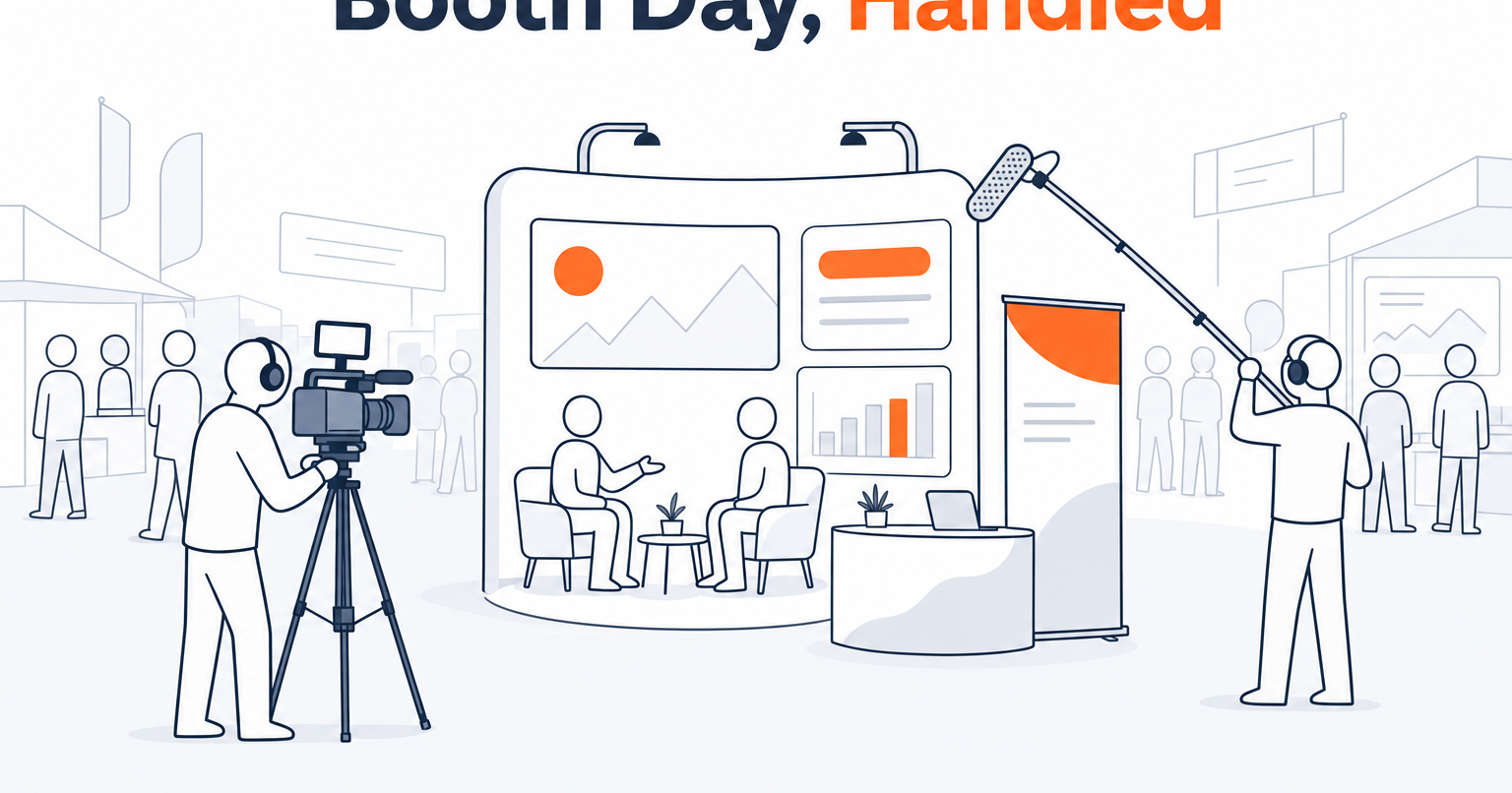
Yes. It is about 80 miles from Winston-Salem to uptown Charlotte, roughly 90 minutes if you leave before the Kannapolis stretch of I-85 backs up. A crew can leave at 5:30am, be through the loading dock before the hall opens, shoot a full exhibit day, and drive home after teardown. No hotel line item, no travel day on the invoice.
Distance is not the variable that decides whether booth content turns out well. Badge deadlines, hall rules, audio in a room running 80 decibels of ambient noise, and a capture list built backward from a finished edit are the variables. Here is how to plan the day.
Step 1: Get the exhibitor services manual and read it
Every show publishes one, and it is where the surprises live. Four things to find:
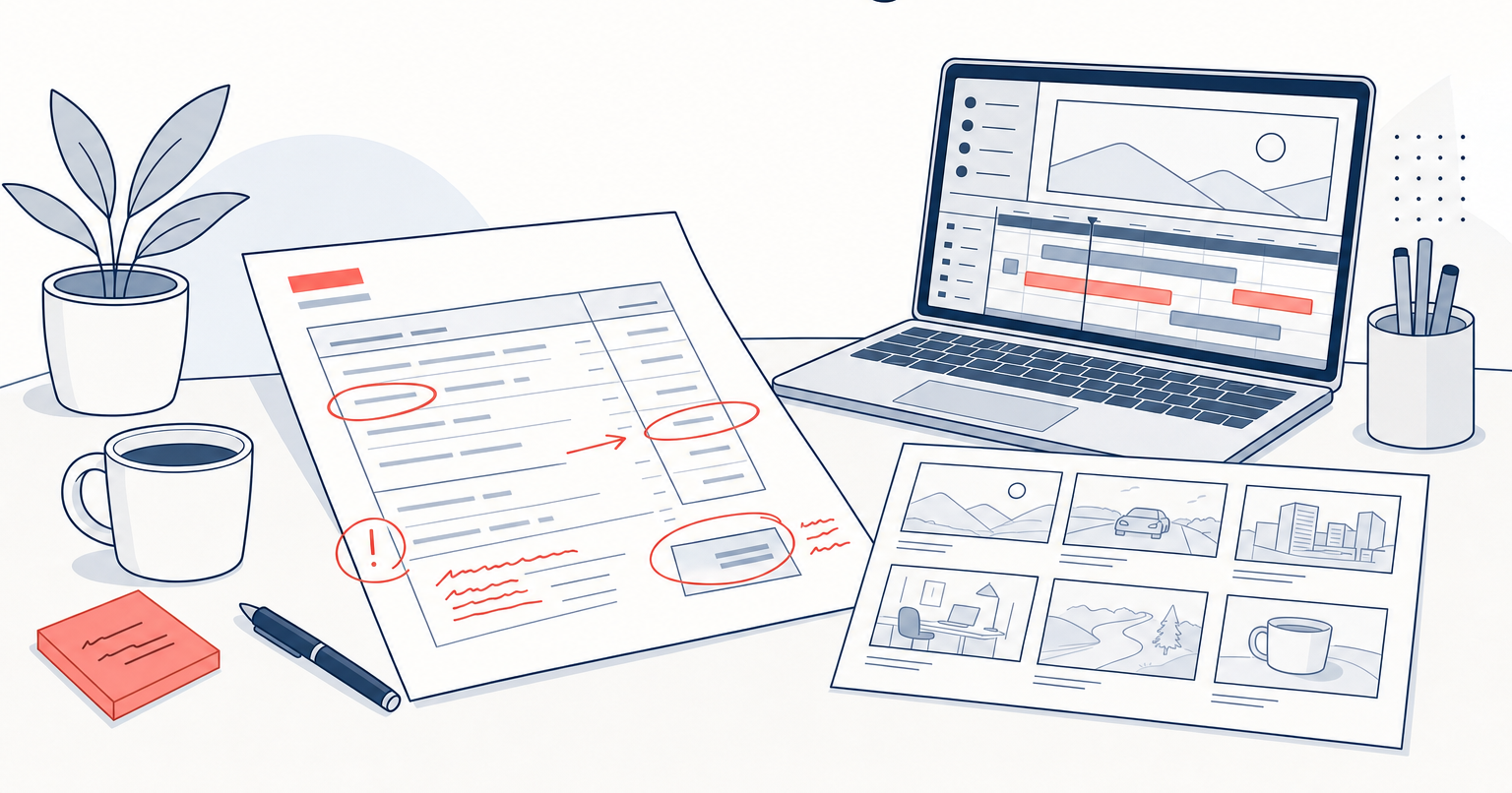
- Badge and credential deadlines. Most shows require every crew member registered as exhibitor staff or press, and the cutoff usually lands one to three weeks before doors. If your show is next month, this is the item that is already close. Miss it and you are paying onsite rates or arguing with a badge desk at 7am.
- Certificate of insurance requirements. Show management will want general liability naming the venue and the show as additional insured, usually at a one or two million dollar limit. A working crew should produce that COI within a day. If they stall, that tells you what you need to know.
- Filming restrictions. Plenty of shows prohibit shooting anywhere outside your own booth footprint without press credentials, and many ban tripods in the aisles on fire-code grounds. Aisle b-roll and wide floor shots are the thing you have to ask permission for, not assume.
- Power and labor. North Carolina is right-to-work, so you will not hit the labor rules that make a Chicago or Las Vegas shoot expensive. What you will hit is the venue's exclusive electrical provider and its order deadline. Order the drop in advance if you are running lights; onsite orders routinely cost double.
One more Charlotte-specific note: confirm the actual venue before anyone plans a route. Not every show is at the Charlotte Convention Center. Trade shows land at the Park Expo, at the speedway complex up in Concord, and at hotel ballrooms uptown, and the load-in reality at each one is different.
Send the manual to your production partner the day you book the booth. Not the week before the show.
Step 2: Decide what the footage is for before anyone builds a shot list
"Get some booth content" is how you end up with 400GB of nothing. Pick the deliverables first, then reverse-engineer the capture list. One crew, one day, one booth realistically supports a 60 to 90 second recap, four to six customer or partner testimonial cutdowns, and a batch of vertical clips for social. That is the ceiling, not the floor.
Testimonials are the deliverable that reshapes the whole day. They need a quiet corner, a slot list with names on it, and somebody from your sales team doing the asking in advance. Customers do not volunteer to go on camera between demos. They show up because a rep emailed them two weeks ago and booked 10:15, 1:30, and 3:00. If nobody owns that recruiting job, you will get b-roll and excuses. Our walkthrough of how to turn raw interview footage into a powerful customer testimonial video covers what those conversations need to contain to be usable later.
Step 3: Right-size the crew
Two people is the sweet spot for a single booth on a single day: a shooter who directs, and an audio and utility person who also chases signed releases and logs what was captured. Solo works for pure b-roll and nothing else. The moment interviews are on the schedule, one person cannot mic a subject, ride levels, and calm a nervous customer at the same time. Three only makes sense if you are covering a keynote and the booth in parallel.
Audio is where trade show footage dies. Convention floors sit somewhere around a busy restaurant, with PA announcements punching through and a neighbor's demo loop repeating every ninety seconds. Lavaliers on both the interviewer and the subject, a backup recorder running, and an interview position chosen for what is behind and beside it. A shotgun mic alone in that room will not save you, and neither will a noise-reduction plugin.
Step 4: Build the day as a schedule
A workable booth day: shoot clean beauty shots of the booth during the exhibitor-only hour before anyone touches it, capture floor energy at the first traffic peak, run interviews in the mid-morning and mid-afternoon lulls when your reps are not abandoning live conversations, and get leadership soundbites at the end of the day when they can finally breathe. Every interview is a booked slot with a name attached. Anything unscheduled will not happen.
Step 5: Plan the edit before you shoot
Most teams skip this, which is why so much event footage never gets cut. Event footage is raw material for a story, not a highlight reel waiting to assemble itself.
The structure we use opens on something the viewer wants or is frustrated by in the first few seconds, never on a person stating their name and title, because nobody has earned that patience yet. The brand arrives as the guide who has solved this before, then a narrow set of points mapped to outcomes the viewer actually cares about. Narrow is the operative word. If everything on the floor is exciting, nothing in the edit is.
That structure dictates the capture list. If the recap needs a customer naming their problem out loud, somebody has to ask the question that produces that sentence while you are standing in the booth. Post cannot invent it. Our breakdown of how to extract and sequence the best soundbites from interview footage covers what to listen for while the subject is still in the chair, and how to turn boring interview footage into a compelling brand story covers what happens to it after the show.
What to ask a crew before you hire them for the show
Ask how they handle audio on a loud floor. Ask what they need from you two weeks out. Ask what the first five seconds of the recap will be. If the answers come back about credentials, capture lists, and story structure instead of which camera body they just bought, you are in good hands.
We shoot on location across the Triad and Charlotte regularly, and a same-day event trip is normal for us rather than a special arrangement. If you have a show on the calendar, send us the dates and the exhibitor manual and we will tell you plainly what one day on that floor can produce. The work page shows what comes out the other side.