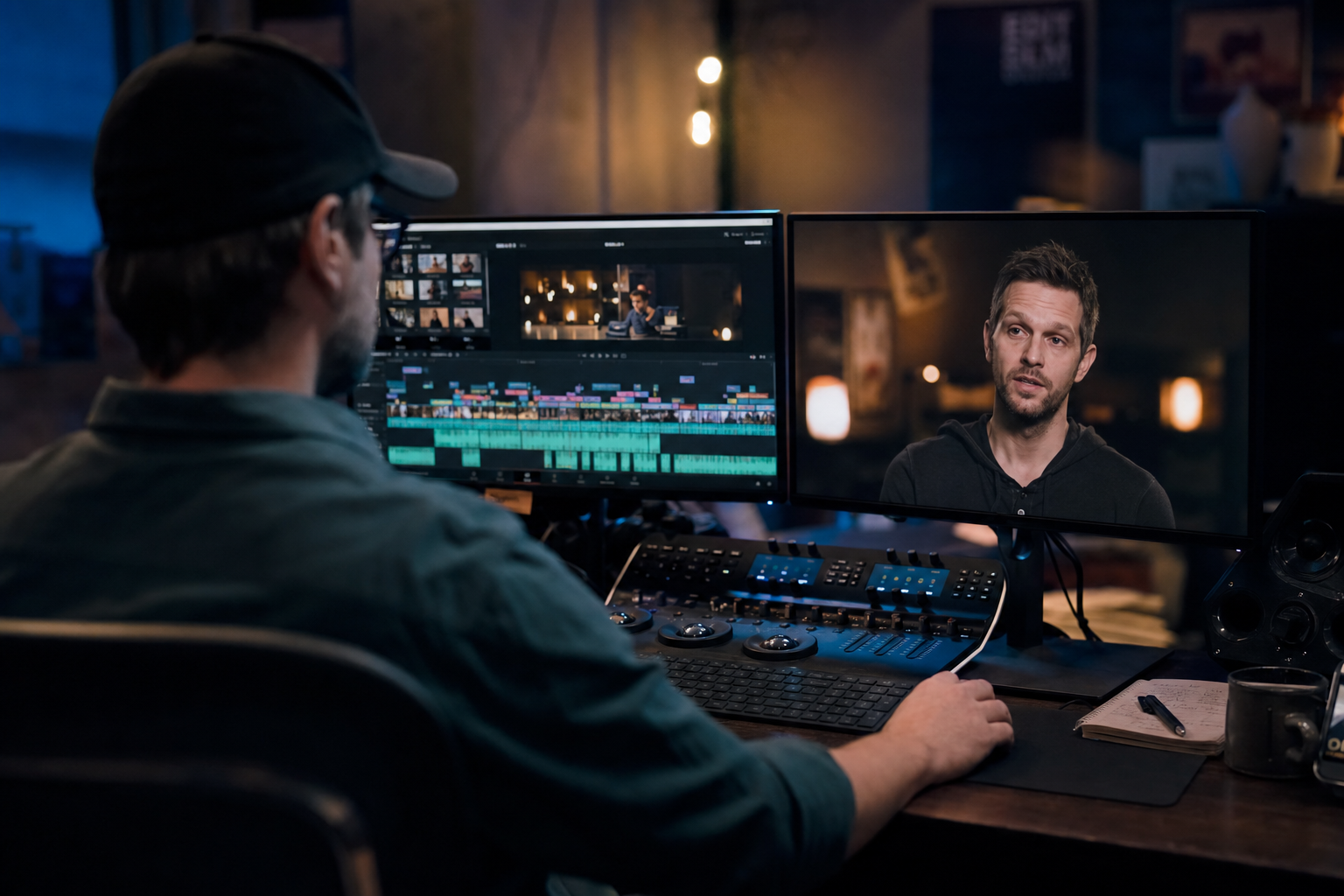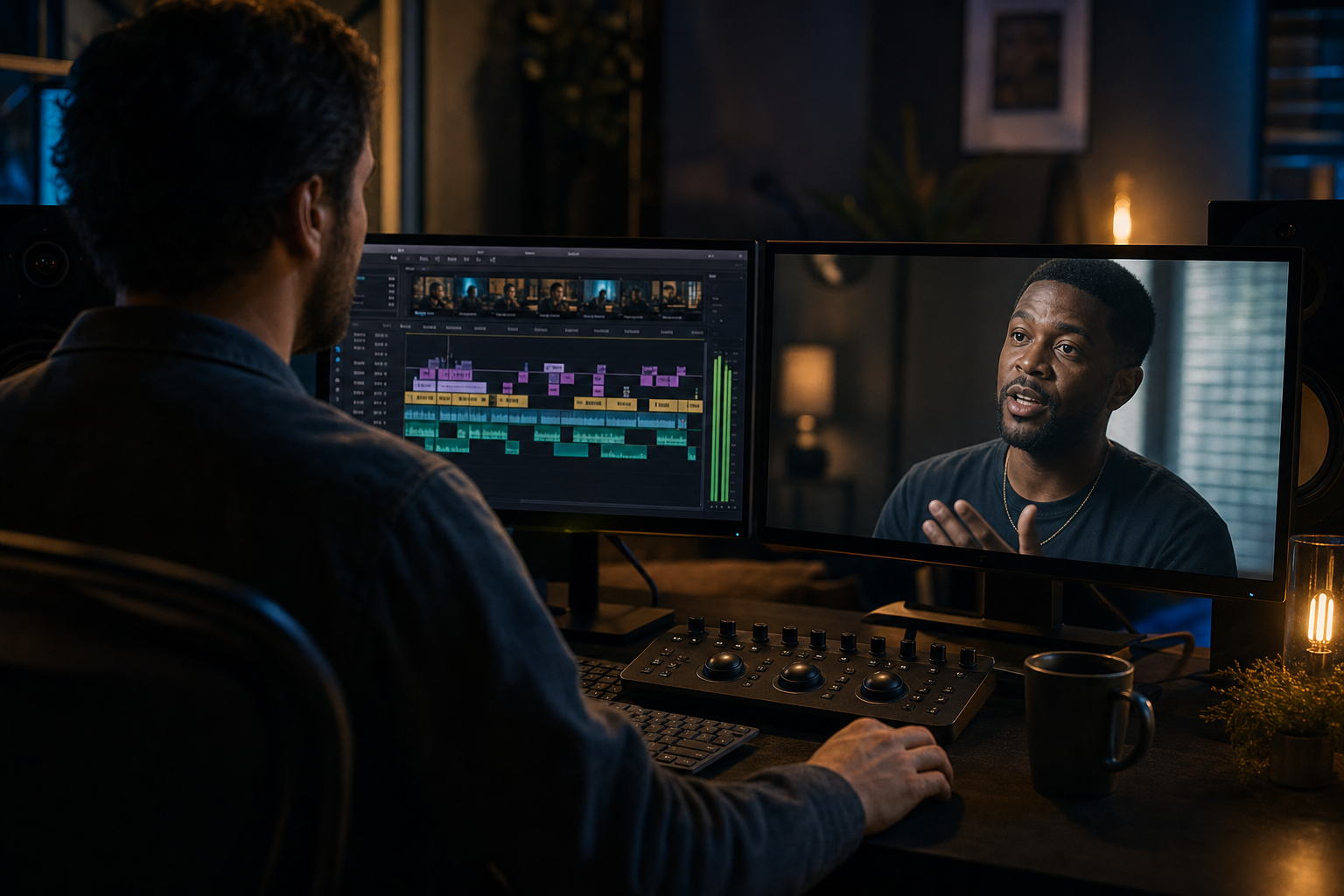
The best soundbite is not the smartest thing your interviewee said. It is the sentence that names the viewer's pain in plain language, delivered with feeling. To build a testimonial or founder story that actually holds attention, you pull those pain-first moments out of your raw footage, trim them to their sharpest form, and sequence them into a story that follows a proven structure: pain, guide, plan, resolution. Everything else, including the intro your interviewee wanted to give, goes on the cutting room floor.
Here is the process, step by step.
Step 1: Watch the footage looking for pain, not polish
On the first pass, ignore the well-rehearsed answers. You are hunting for the moments where the interviewee described a problem, a frustration, or a stuck point they lived through before the solution existed. These are gold because your viewer is living some version of that same problem right now.
Mark timecodes for anything that sounds like:
- The specific frustration ("we were spending 20 hours a week on this")
- The stakes ("if we did not fix it, we were going to lose the account")
- The emotional turn ("I remember sitting there thinking, there has to be a better way")
Skip the introductions. Skip the company history. Skip anything that starts with "so basically." No one cares who someone is until they care what someone can do for them.
Step 2: Trim every soundbite to its shortest strong form
Once you have your candidate clips, cut each one down until removing another word would break the sentence. Interviewees pad. They restart. They qualify. Your job is to keep the verb, the specifics, and the feeling, and lose the rest.
A 22-second answer often has a 6-second gem buried in the middle. Find it.
Step 3: Open on pain, then spell the pain out further
The first three to five seconds decide whether anyone keeps watching. Do not open with a name card or a company logo lingering on screen. Open with the strongest pain soundbite you have, then follow it immediately with a second soundbite that expands on that pain.
This does two things. It reminds the viewer of the problem they want desperately to solve, and it makes them feel understood. If they feel understood in the first ten seconds, they will stay for the next sixty.
Step 4: Introduce the brand as the guide, not the hero
After the pain lands, sequence in a soundbite (or a short bit of narration) that names the brand and follows it with one or two positioning phrases: who they are, who they help, and what outcomes they deliver. Short and confident. This is where credibility gets established without a resume dump.
The interviewee is the hero of the story. The brand is the guide who hands over the plan.
Step 5: Sequence the middle around three, not thirteen
If your interviewee described eight benefits, pick three. There is real power to the number three for comprehension and memory. If you tell the viewer everything, they remember nothing. If everything is exciting, nothing is exciting.
Choose the three soundbites that best map to the pains you opened with, and put them in a logical order the viewer can follow.
Step 6: Edit for rhythm, not just meaning
This is where most testimonials die. Even the right soundbites in the right order fall flat without pacing.
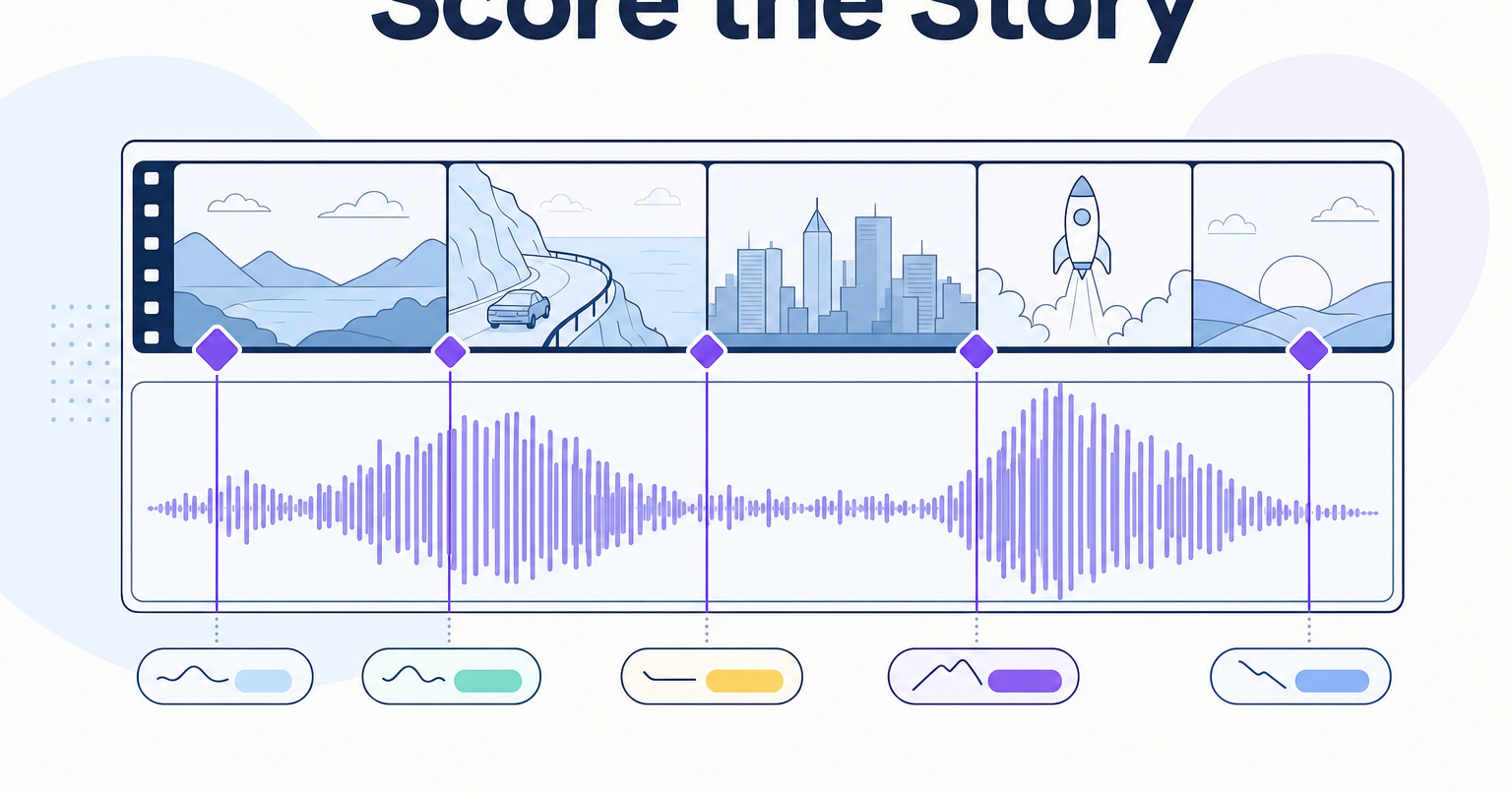
Map the turns of your story to the turns of your music. Trim and rearrange the song so the energy of the track rises and falls in lockstep with the story. When you hit your most powerful soundbite, build an impact moment: strip the music out under the line, add a reverb tail to the cut, use a riser into it, and drop the music back in hard as the line ends. Think of it as a punctuation mark on a powerful sentence.
Step 7: End on the transformation
Close on a soundbite where the interviewee describes life after the change. Specifics beat superlatives. "We got our Fridays back" beats "it was great."
If you want to see this approach applied to your own footage, this is the entire craft behind Full Send's video production work, and it is the same framework we use on explainer videos for SaaS. We have taken footage another agency already used and turned it into a client's most-watched testimonial without shooting a single new frame. Better sequencing does that. If you have interview footage sitting in a drive somewhere, it is probably worth more than you think. Talk to us when you are ready to find out.