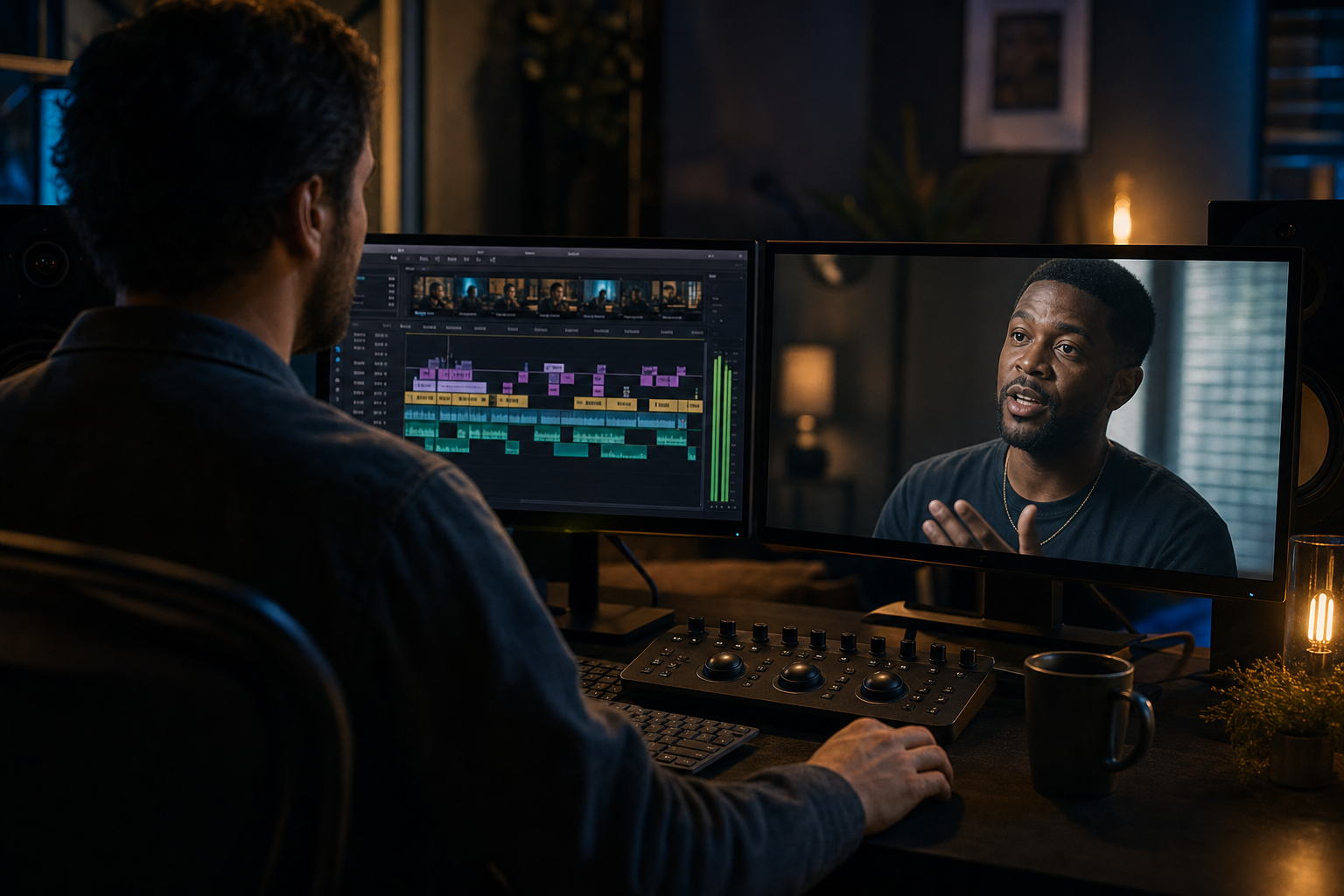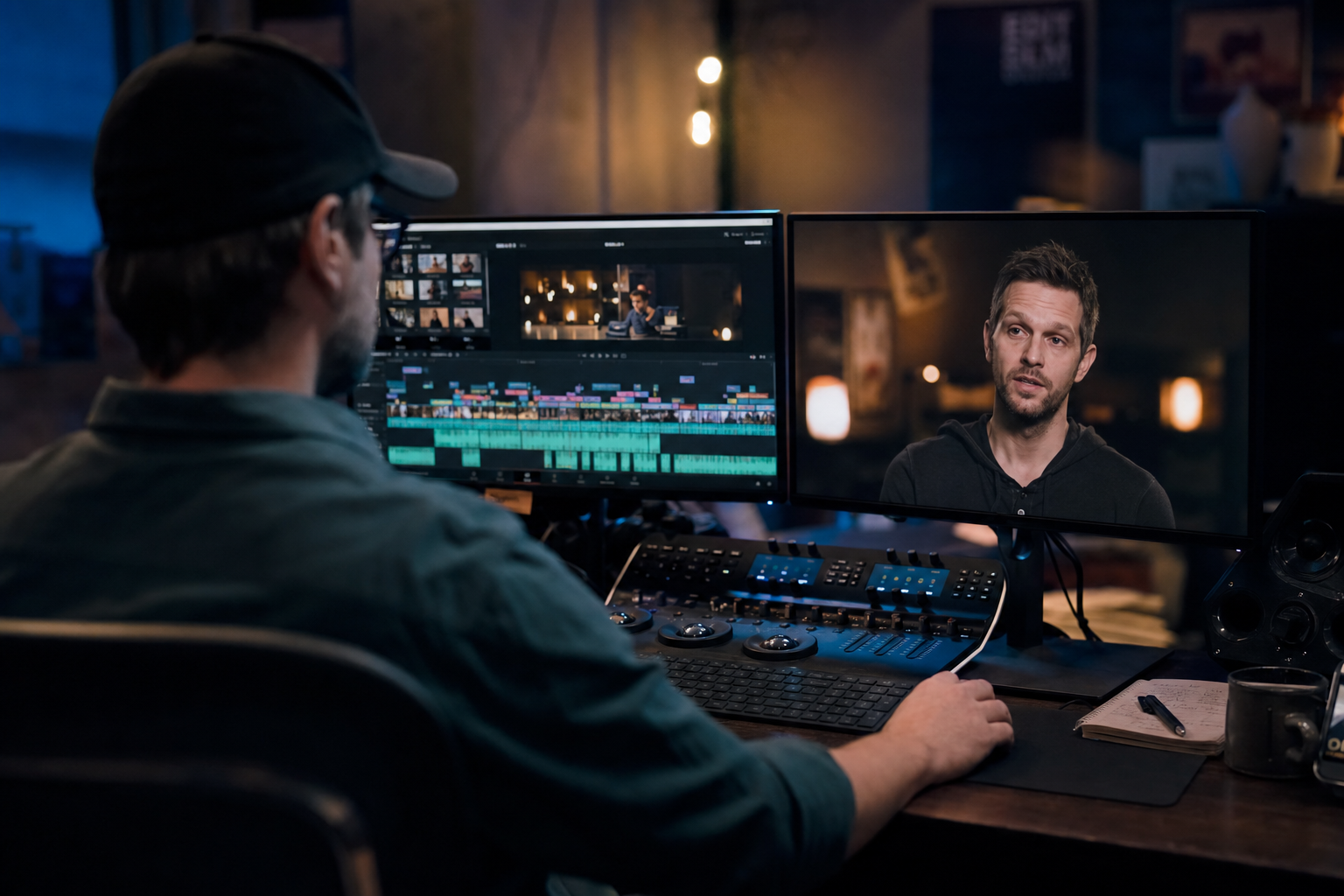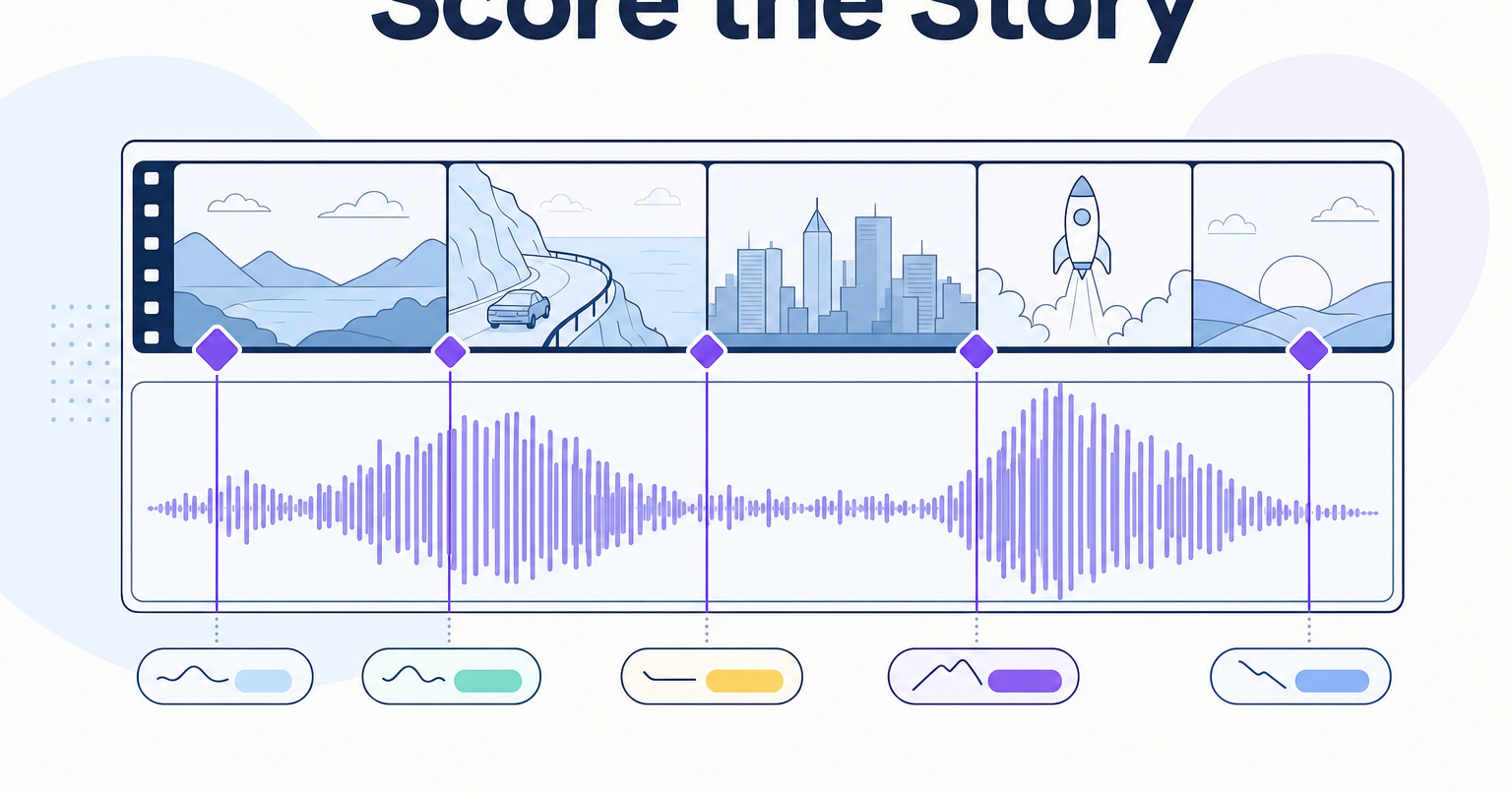
Music editing in a brand video is the deliberate work of trimming, extending, and rearranging sections of a song so its energy shifts land on the same frames where the story shifts. It is not choosing a track and dropping it under the edit. Syncing song energy to story turns means the music quiets when the pain is being introduced, builds as the stakes rise, and drops hard the instant the resolution or key line hits. Done well, the viewer feels the story before they can name why.
That gap between "picked a good song" and "edited the song to the story" is the reason two videos with identical footage can feel completely different. One feels electric. The other feels like a slideshow with background music. Here is what is actually happening under the hood.
Why song selection alone will never carry a brand video
Most flat brand videos are not flat because the song is bad. They are flat because the song was treated as wallpaper. A three-minute track has its own arc, verse, pre-chorus, drop, breakdown, and outro, and those arcs almost never match the arc of your interview or script by accident. Layer them straight and the music peaks during a slow moment, or the story climaxes during a soft verse. The viewer feels the mismatch as boredom, even if they cannot articulate it.
The fix is not a better song. It is treating the song as raw material, the same way you treat interview footage. You cut it. You rearrange it. You rebuild it around the story.
Mapping the story turns first, then reshaping the song around them
Before any music work happens, the edit is broken into turns: the moment the pain lands, the moment the stakes escalate, the moment the brand enters as the guide, the moment the solution clicks, the moment the outcome arrives. These are the beats the viewer's attention hangs on.
Once those turns are marked on the timeline, the song gets rebuilt to match. That means:
- Trimming sections that would sit under a quieter story moment
- Extending a build so it resolves exactly on the beat where the story turns
- Rearranging verses, drops, and breakdowns so the song's climax lines up with the story's climax
The rule is simple: the energy level of the song should match the energy level of that section of the story, always. When the story is settling into empathy for the viewer's problem, the music sits back. When the story pivots to the solution, the music lifts with it. Every rise and fall in the track is lock-step with a rise or fall in the narrative.
The "impact moment," and why it is the punctuation mark of a great edit
There is a specific technique for the one or two lines in a video that carry the most weight: an "impact moment." It works like this. Right before the powerful soundbite lands, the music cuts out. A polished reverb tail is added on the cut so the sudden silence has shape instead of feeling amateur. A riser builds tension into the drop. The soundbite plays clean, with room to breathe. Then the music slams back in hard the instant the line concludes.
Think of it as a strong punctuation mark at the end of a powerful sentence. It tells the viewer's brain: this one matters. Pay attention. Videos with two or three of these moments feel like trailers. Videos with none feel like corporate B-roll set to a loop.
A real example of what music editing changes
One client sent over interview footage that a previous agency had already produced. The finished piece had fallen flat, close to unwatchable. Same footage, reedited with soundbite sequencing built around the story turns and the music rebuilt to match those turns, became one of that client's most impactful testimonials. The footage did not change. The music editing, pacing, and impact moment craft did. That is the whole difference.
What to ask for from your next video partner
If you are commissioning a brand video, or an explainer video for a SaaS product, do not just ask what song will be used. Ask how the song will be edited to the story. Ask where the impact moments will land. Ask which soundbite will get the music drop. A partner who can answer those questions specifically is a partner who understands that music editing, not music selection, is what makes a video move people.
That is the work Full Send builds every edit around. If your last video felt flat, the music was probably doing wallpaper duty when it should have been carrying the story. There is a version of your footage where every beat lands. It usually starts with rebuilding the song.