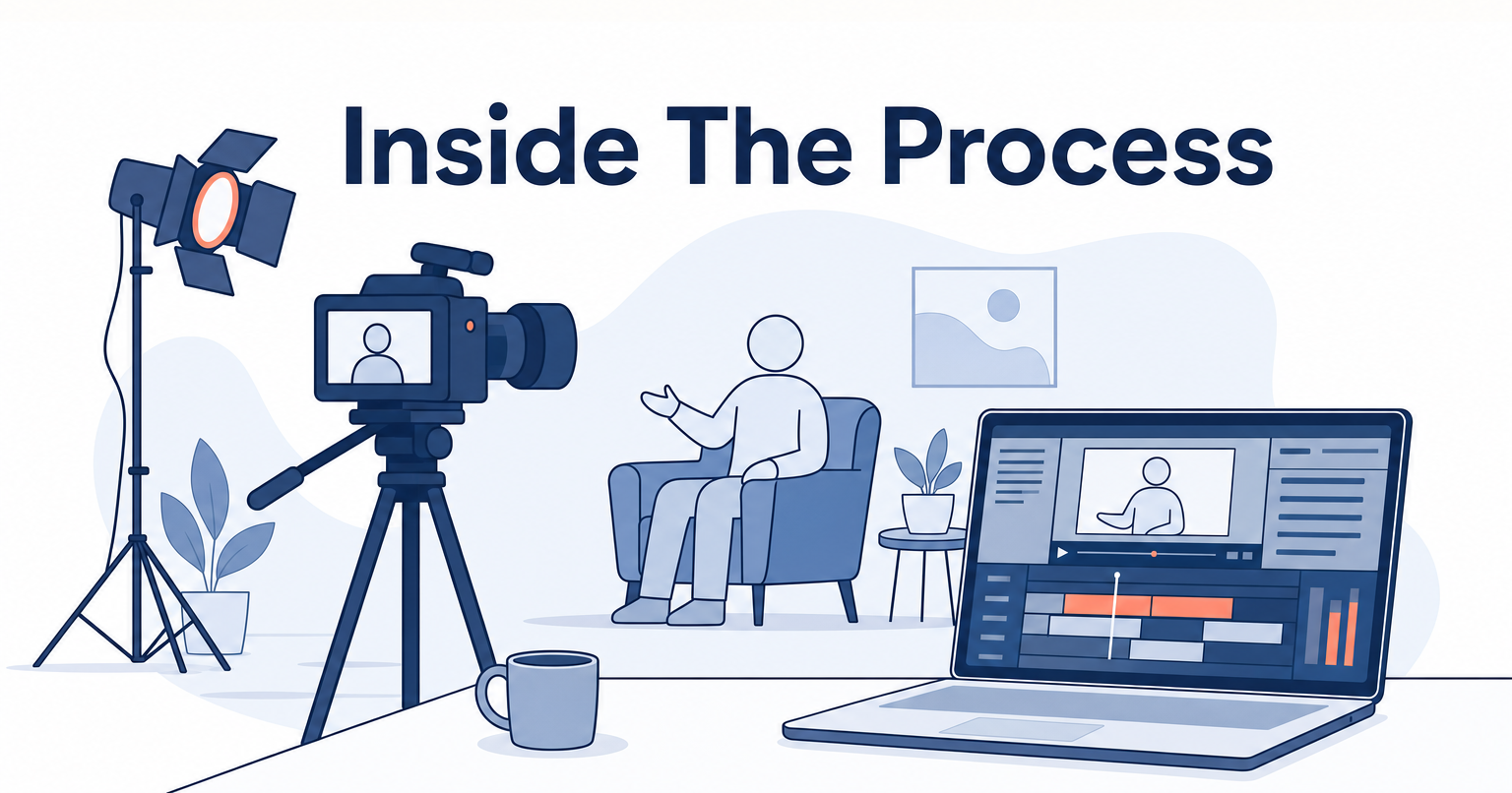
Your corporate video feels boring because it opens with something no viewer cares about (usually an interviewee introducing themself), it treats every feature as equally important, and the audio track sits at one flat energy level from start to finish. Those three failures compound: the hook is missing, the message is diluted, and the pacing never earns your attention. Fix them and the same footage can become the most powerful piece your brand has ever put out.
Marketing leads at tech and SaaS companies ask us versions of this question every week. Here are the real ones, answered directly.
Why do B2B videos feel so lifeless compared to a good movie trailer?
Because most of them are edited to a locked, unedited music bed. The song plays. The interview plays on top. Nothing in the audio is reacting to the story.
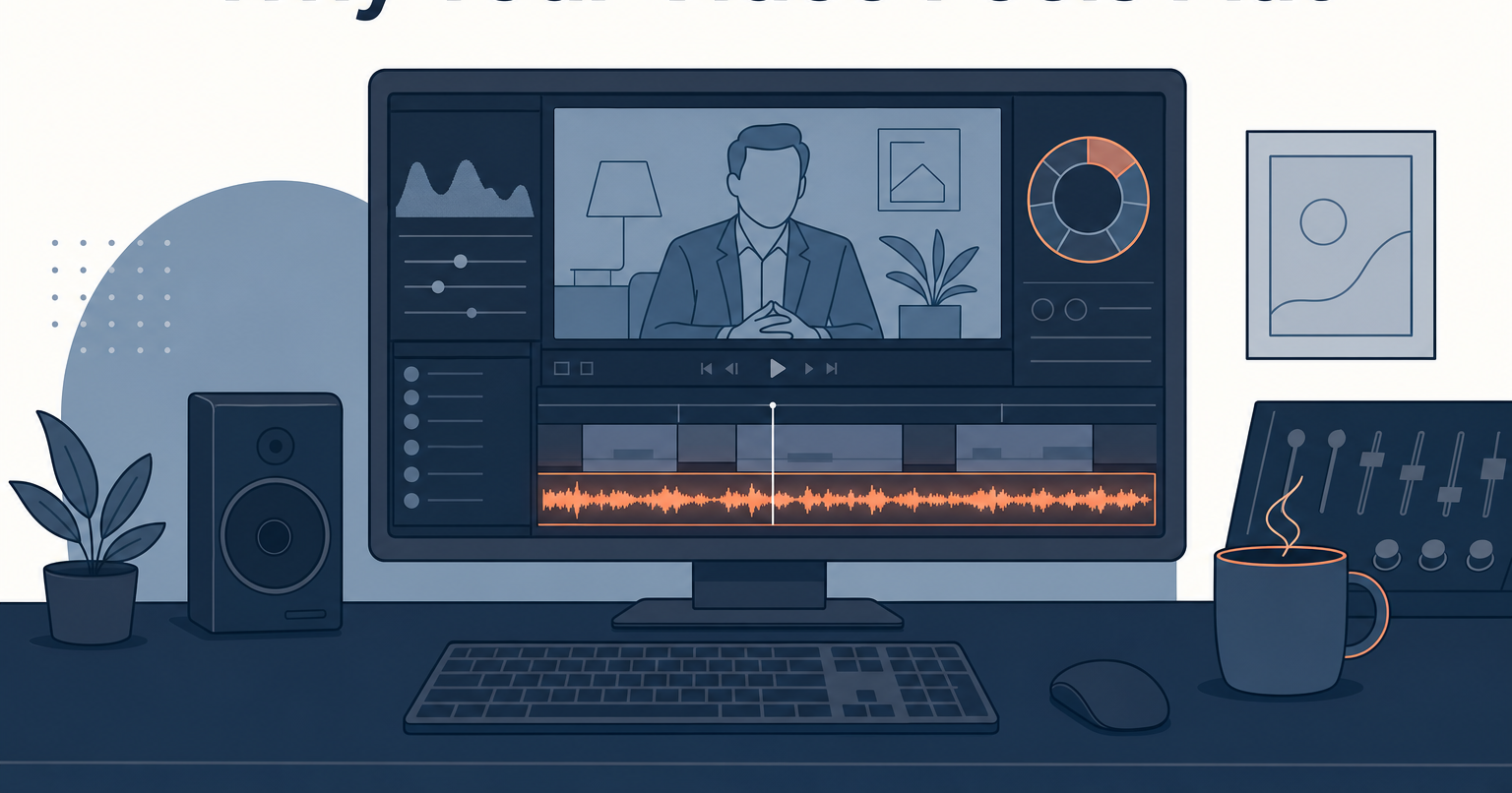
Movie trailers work because the music is chopped, rearranged, and re-timed so that its rises and falls line up with the turns in the story. In our edits, we map the story beats first, then trim, extend, and rearrange sections of the song so the energy of the music always matches the energy of that section of the story. When the story turns, the music turns with it. That is the difference between "background audio" and a soundtrack.
What is the single most common mistake in the first five seconds?
Opening with the interviewee saying their name and title, then a sentence about their career journey.
No one cares. Not because your customer is not impressive, but because the viewer has not been given a reason to keep watching yet. The first few seconds decide whether they scroll or stay. Open on a specific pain or a specific desire that your target viewer already feels. Then spell that pain out a little further, so the viewer is reminded of the problem they want desperately to solve and feels understood. That is the hook.
What is an "impact moment," and why does one edit trick change everything?
An impact moment is a way of punctuating a powerful soundbite so the viewer physically feels it.
Here is the mechanic: pick one line that carries real weight. Cut the music out under it. Add a polished reverb tail on the last word. Use a riser to build tension into the drop. Then bring the music back in hard right as the soundbite finishes. It functions like an exclamation point at the end of a strong sentence. Most corporate edits have zero impact moments in a two minute video, which is why they feel like a level line on a heart monitor.
Why does showing more features make our SaaS video convert worse?
If everything is exciting, nothing is exciting. If everything is loud, nothing is loud.
Comprehension and memory collapse when you list ten features in ninety seconds. We narrow every SaaS explainer video down to three features, chosen by mapping features to the specific pains they alleviate and the specific outcomes they deliver. Three lands. Ten evaporates. The pushback from clients is always the same ("but our product does so much more"), and the answer is always the same: the goal of the video is not to document your roadmap, it is to move a prospect one step closer to a conversation. For more on picking the right approach, see our guide to choosing an explainer video style for SaaS.
We already shot our footage and it feels flat. Is it salvageable?
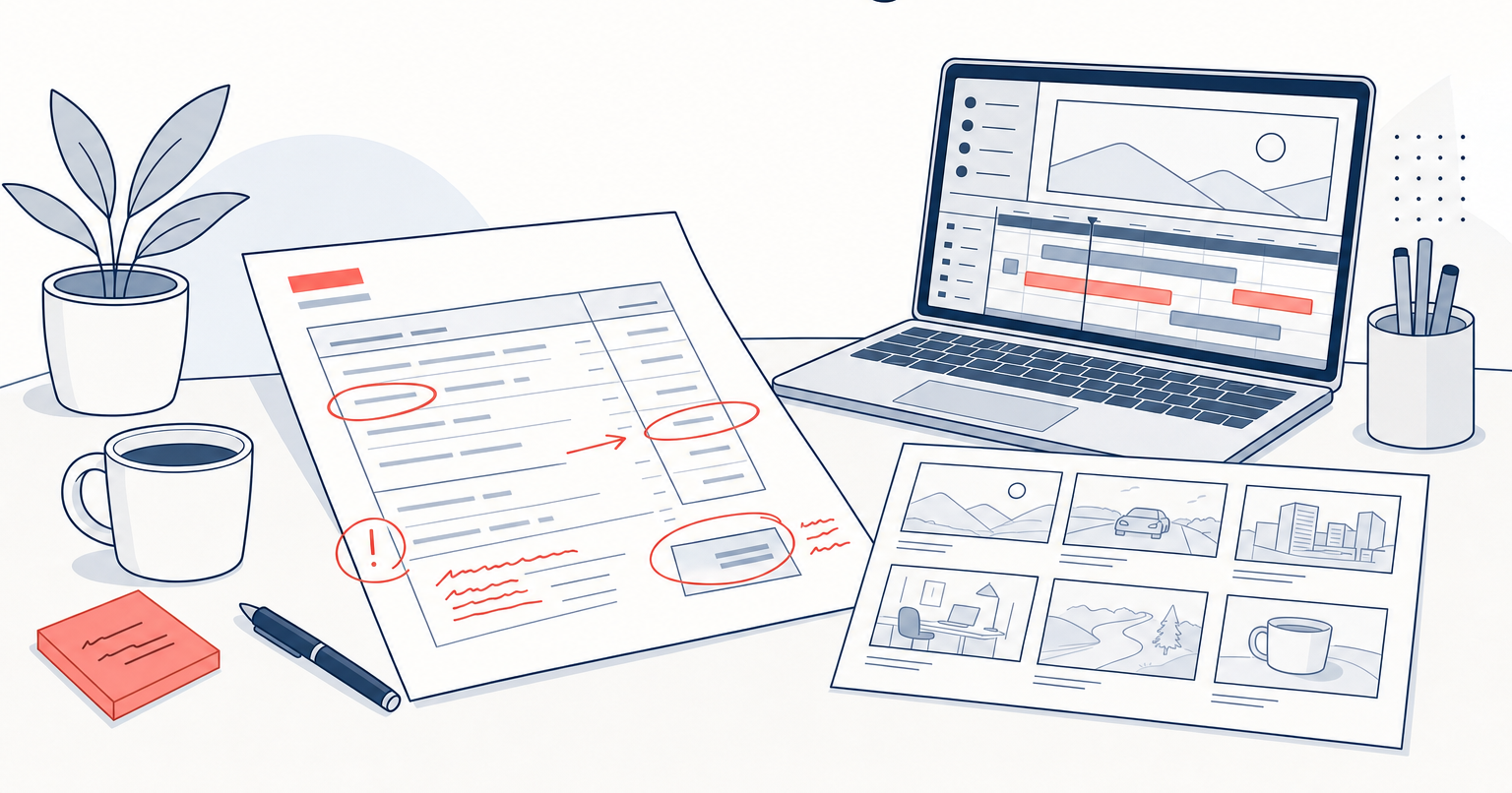
Often, yes. One of our most impactful testimonials was reedited from footage another agency had already used and delivered. Same interviews. Same B roll. We chose different soundbites, sequenced them into a Storybrand-shaped arc (pain, guide, plan, outcome), and rebuilt the pacing. The client called the recut their most powerful piece of content. Before you reshoot, get a second set of eyes on the assembly.
How do we position the brand without sounding like a sales pitch?
After the pain is established, name the brand once and follow it immediately with one or two positioning phrases that say who the brand is, who they help, what they are qualified to do, and what outcome they deliver. That is it. The brand is the guide, not the hero. The customer is the hero. This is the framework we build every video strategy around, and it is why "guide" positioning outperforms "hero" positioning in B2B nearly every time.
What should we ask a production partner to prove they can fix a flat video?
Ask them to walk you through, at the soundbite level, why they would open a specific edit on a specific line. Ask what their impact moments sound like. Ask how they would narrow your product story to three features. If the answer is vague or format focused ("we do 60 second social cuts and 2 minute brand films"), keep looking. Craft answers craft questions.
If you have footage sitting in a folder that never quite landed, that is usually where the fastest win is hiding.